

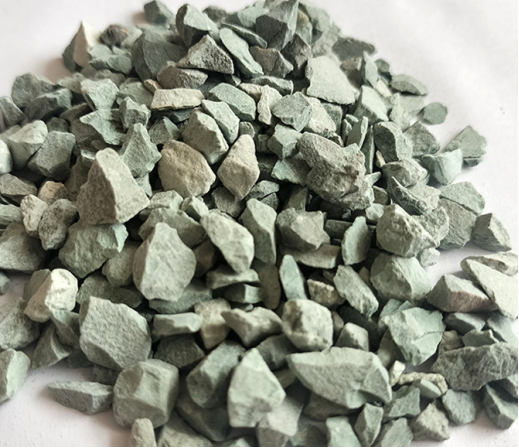
Zeolite is a hydrated crystalline alumina silicate.The resulting pristine rock is unique for its purity, quality and stability. Zeolites have a complex honeycomb type structure with a high internal surface area and an amazing ability to attract, hold or replace positively charged ions without disrupting this incredible structure.Zeolite is used in a variety of applications such as agriculture, water purification, filtration, animal nutrition, and human health. Zeolites are capable of incorporating cations such as mercury, nickel, arsenic, and cadmium heavy metals and releasing phosphates, magnesium, or calcium.Cation exchange properties vary by type of zeolite. Cation exchange is generally weaker in naturally-occurring zeolite than synthetic zeolites due to its potential impurities. Synthetically-derived zeolites are made with a heated solution of silica, aluminum, and sodium hydroxide.
Natural zeolite has been used in a variety of applications that require a natural and ecological filtration method.
WATER WASTE TREATMENT
Due to the natural ion exchange properties of zeolites, this media is used as a natural alternative in industrial water purification and waste water purification such as in septic tanks or sewage treatment plants. It can adsorb heavy minerals like lead or arsenic and cations like iron, ammonium, and zinc.
SWIMMING POOLS
Zeolites are a common filter media used to purify swimming pools, an alternative to sand. It offers better water quality and lower maintenance. It can separate particles up to 5 microns and adsorb toxins through ion exchange. As a result, particles such as chloramines and lime are removed, leaving behind a clear and pure water.
DRINKING WATER FILTRATION
Zeolite is a common material used for the purification of drinking water. It removes toxins of up to 5 microns and heavy metals through ion exchange. The removal of chemicals from the water can make it drinkable and cleaner tasting.


